I remember the first time I realized something disturbing about the human mind.
A person can lie without knowing they are lying.
Not to others.
To themselves.
That realization is what pulled me toward psychology.
Most people think science is about microscopes, chemicals, and things you can see. Psychology studies thoughts, emotions, memories, fears, and desires. These things are invisible. So the question naturally appears:
Can something invisible be scientific?
For a long time, I struggled with this question.
If psychology is a science, why do people behave differently in the same situation? Why do some psychological studies fail to replicate? Why can two people experience the same event and remember it differently?
The answer lies in the nature of the subject itself.
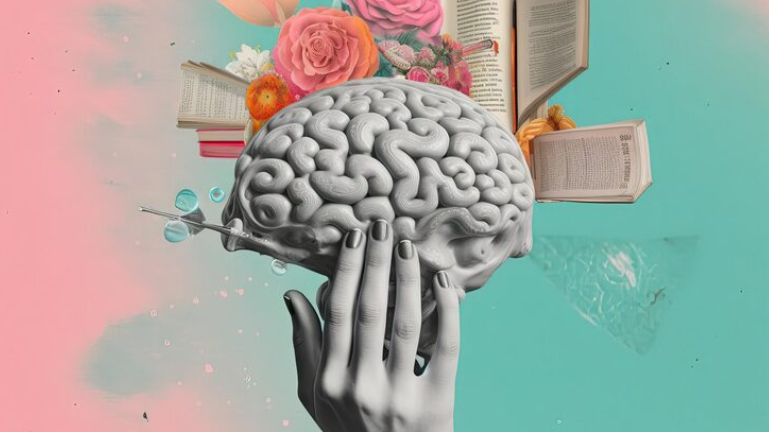
Psychology studies the most complicated object we know: the human mind.
A chemist does not worry that a molecule will change its behavior because it feels embarrassed.
A physicist does not deal with childhood trauma.
Psychologists do.
That is why psychology can sometimes feel less precise than other sciences. The problem is not that psychology lacks scientific methods. The problem is that humans are messy.
Yet psychology follows the same basic principles of science.
We observe behavior.
We develop theories.
We test those theories through experiments.
We collect data.
We revise our conclusions when evidence proves us wrong.
That process is science.
The dark secret is that psychology often reveals things about us that we do not want to know.
We like to believe we are rational.
Research repeatedly shows that we are not.
We like to think our memories are recordings.
Psychology shows they are reconstructions.
We like to think we understand why we make decisions.
Many times, we create explanations after the decision has already been made.
The mind is not always the trustworthy narrator we imagine it to be.
That is exactly why psychology needs science.
Without scientific methods, we would be trapped inside our own assumptions. We would mistake personal beliefs for facts.
Science gives psychology a way to challenge intuition.
It forces us to ask uncomfortable questions.
What if my memory is wrong?
What if my confidence means nothing?
What if I do not know myself as well as I think?
Psychology is not a perfect science.
No science is.
But it is a science because it seeks evidence rather than comfort. It tests ideas rather than blindly accepting them.
And perhaps that is what makes psychology so fascinating.
It studies the one thing we use to understand everything else.
The human mind.
Including its ability to deceive itself.
Leave a Reply