I used to think social media was addictive because it was entertaining.
Then I noticed something strange.
There were days when I wasn’t even enjoying it.
Yet I kept scrolling.
I would open an app without thinking.
Close it.
Open it again minutes later.
Not because I needed information.
Not because I was having fun.
Because something deeper was happening.
That realization made me curious.
If people aren’t always enjoying social media, why do they keep returning to it?
The answer, I think, has very little to do with entertainment.
And everything to do with anticipation.
Human beings are surprisingly good at adapting to rewards.
What excites us today eventually becomes normal.
A new phone becomes an old phone.
A promotion becomes a job.
Excitement fades.
The brain gets used to it.
But unpredictable rewards are different.
They keep the brain engaged.
A slot machine works this way.
You never know when the reward will appear.
So you keep pulling the lever.
Not because you’re winning.
Because you might win.
Social media operates on a similar principle.
You never know what the next swipe will bring.
A funny video.
A message.
A compliment.
A shocking headline.
A moment of validation.
Most posts are forgettable.
But occasionally something captures your attention.
And that possibility keeps you scrolling.
The next reward is always one swipe away.
At least that’s what the brain believes.
What fascinates me most is that social media doesn’t just provide information.
It provides social feedback.
And humans are incredibly sensitive to social feedback.
For most of history, belonging mattered.
Being accepted by the tribe increased your chances of survival.
Being rejected could be dangerous.
The modern world has changed.
The psychology has not.
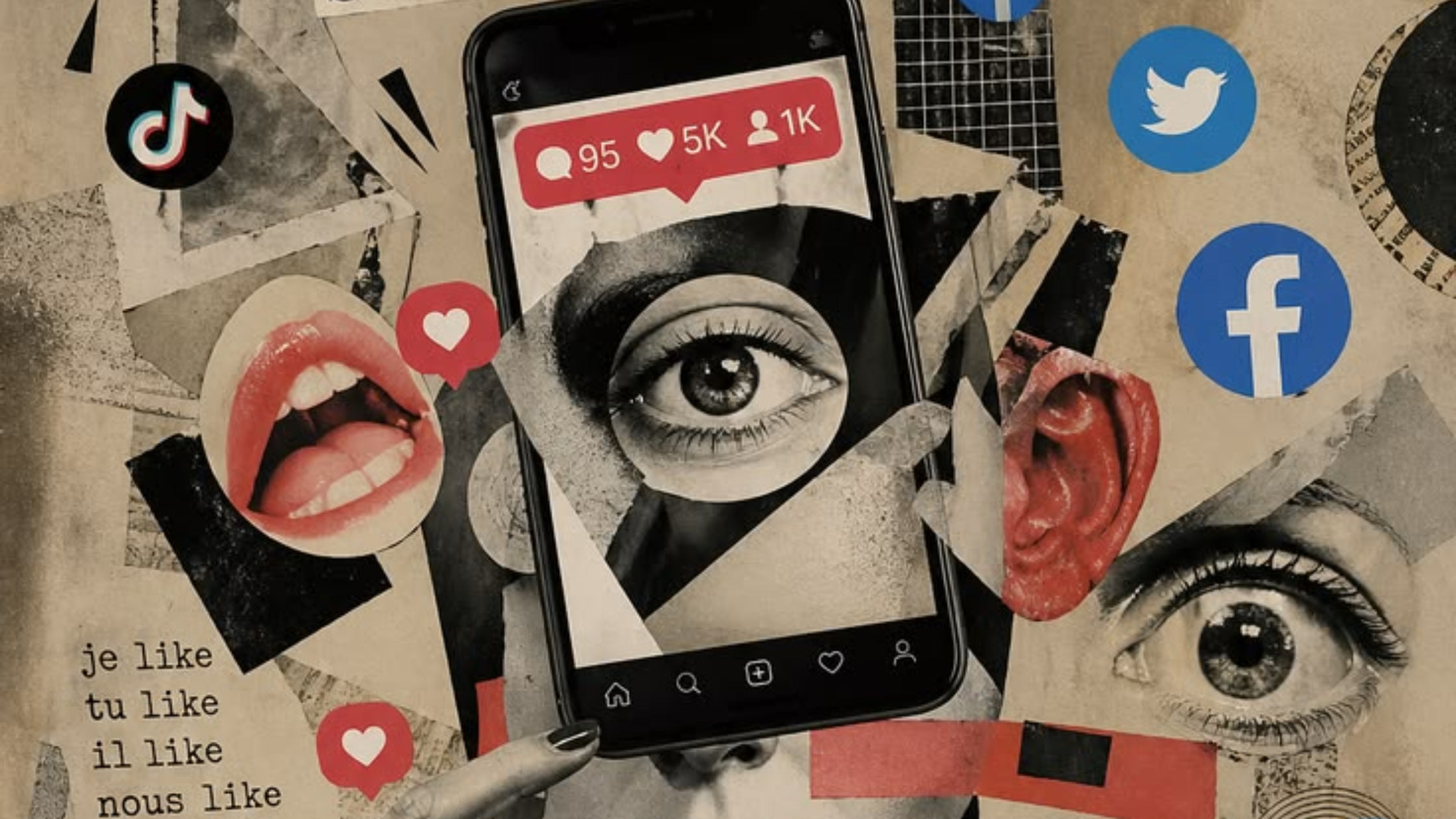
A notification can trigger emotions far larger than the event itself.
A like.
A comment.
A follow.
A message.
Tiny digital signals suddenly feel important.
Because the brain often interprets them as social approval.
And social approval has always carried emotional weight.
But there is another layer that feels darker.
Social media has transformed comparison into a permanent activity.
Thousands of years ago, people compared themselves to a small group.
Family.
Friends.
Neighbors.
Today we compare ourselves to millions.
People with better careers.
Better vacations.
Better relationships.
Better bodies.
Better lives.
Or at least better photographs.
The mind begins measuring itself against carefully curated moments.
And curated moments are dangerous.
Because they rarely reveal reality.
They reveal performance.
Yet the brain often forgets this.
Instead of seeing highlights, it sees standards.
And suddenly ordinary life feels insufficient.
What makes social media especially powerful is that it rarely feels like an addiction.
Most addictions announce themselves.
Social media disguises itself as connection.
As productivity.
As curiosity.
As staying informed.
And sometimes it genuinely is those things.
That is what makes the relationship complicated.
The same tool that connects people can also consume their attention.
The same platform that inspires people can also leave them feeling inadequate.
The same app that provides information can also create dependency.
Perhaps the most unsettling thing I discovered is that social media often exploits a fear many people already carry.
The fear of missing out.
The fear of being forgotten.
The fear of being left behind.
Every scroll becomes an attempt to stay connected.
To stay relevant.
To stay informed.
To make sure nothing important is happening without us.
But the feed never ends.
There is always another update.
Another opinion.
Another video.
Another story.
The finish line keeps moving.
And the mind keeps chasing it.
I think this is why many people feel mentally exhausted after spending hours online.
The brain was never designed to process this much information.
Or this many social signals.
Or this many opportunities for comparison.
Yet we expose ourselves to them daily.
Then wonder why we feel overwhelmed.
The uncomfortable truth is that social media is not addictive because it is evil.
It is addictive because it understands human psychology remarkably well.
It understands our desire for approval.
Our attraction to novelty.
Our fear of exclusion.
Our need for connection.
The platforms did not create these instincts.
They simply learned how to keep them engaged.
And perhaps that is what makes social media so fascinating.
The real battle is not between people and technology.
It is between human attention and the countless systems competing to capture it.
A battle that happens every day.
One notification at a time.
Leave a Reply